The Complete Guide to Dental Implants: Types and How to Choose the Best Option


The Complete Guide to Dental Implants: Types and How to Choose the Best Option
Missing teeth affects a lot more than your smile. They change how you bite, how you speak, and over time, how your jawbone holds its shape. That’s not a cosmetic concern. It’s a structural one. Dental implants are the only tooth replacement option that addresses the structure, not just the visible gap.
This guide covers what you need to know: what dental implants are, the main types available, what All-on-4 means, and how to figure out which option fits your situation.
What Are Dental Implants?
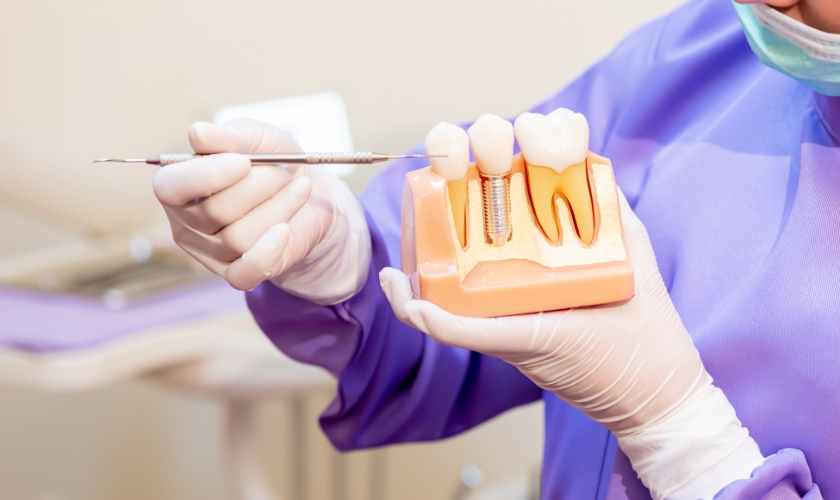
A dental implant is a small titanium post that a dentist surgically places into your jawbone to replace a missing tooth root. Once the implant fuses with the bone through osseointegration, it forms a stable anchor for a crown, bridge, or denture placed on top.
If you’re researching dental implants in North Spokane and trying to figure out whether they’re right for you, it helps to understand how the components work together. A complete implant has three parts:
- The implant post — the titanium fixture that integrates with your jawbone
- The abutment — a connector that links the post to the visible restoration
- The restoration — the crown, bridge, or denture that looks and functions like a real tooth
Because the implant post replaces the root, it stimulates the jawbone the way a natural tooth does. That prevents the bone loss that usually follows tooth removal.
The 3 Main Types of Dental Implants
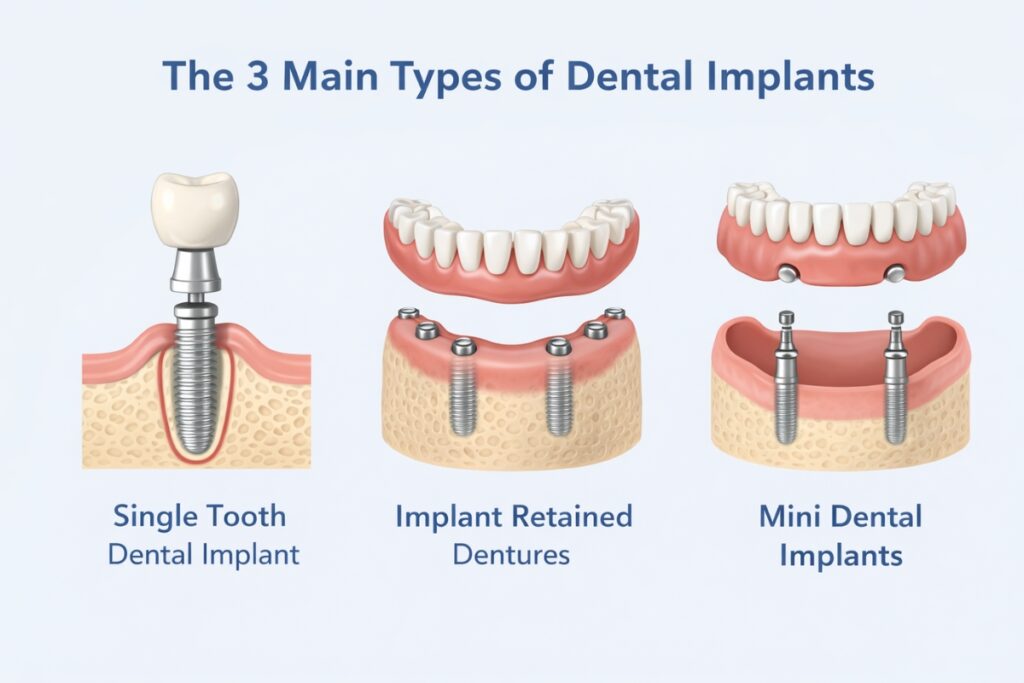
Every patient comes in with a different situation – different tooth loss history, different goals, different jawbone structure. That’s why these three implant options exist. Each one addresses a specific need, and knowing what separates them helps you walk into a consultation with the right questions.
1. Single Tooth Dental Implant
A single tooth implant does exactly what the name says — it replaces one missing tooth with a permanent, standalone restoration. A titanium post is placed into the jawbone and, after it bonds with the surrounding bone, a custom crown is fitted on top. It looks like a real tooth, bites like one, and doesn’t put any pressure on the teeth around it. For patients dealing with one gap, this is the most precise and durable route.
2. Implant Retained Dentures
For patients who want the security of an implant without a fully fixed, non-removable bridge, this is an excellent middle ground. These are dentures that clasp onto dental implants for greater stabilization. Rather than relying on suction or messy adhesives, the denture “snaps” onto the posts.
3. Mini Dental Implants
These are dental implants that are smaller in diameter than traditional implants. Because of their size, they are used in areas with limited bone volume, such as in the lower jaw, to stabilize dentures. They offer a less invasive placement process for patients who might not be ideal candidates for traditional implants.
What Are All-on-4 Dental Implants?
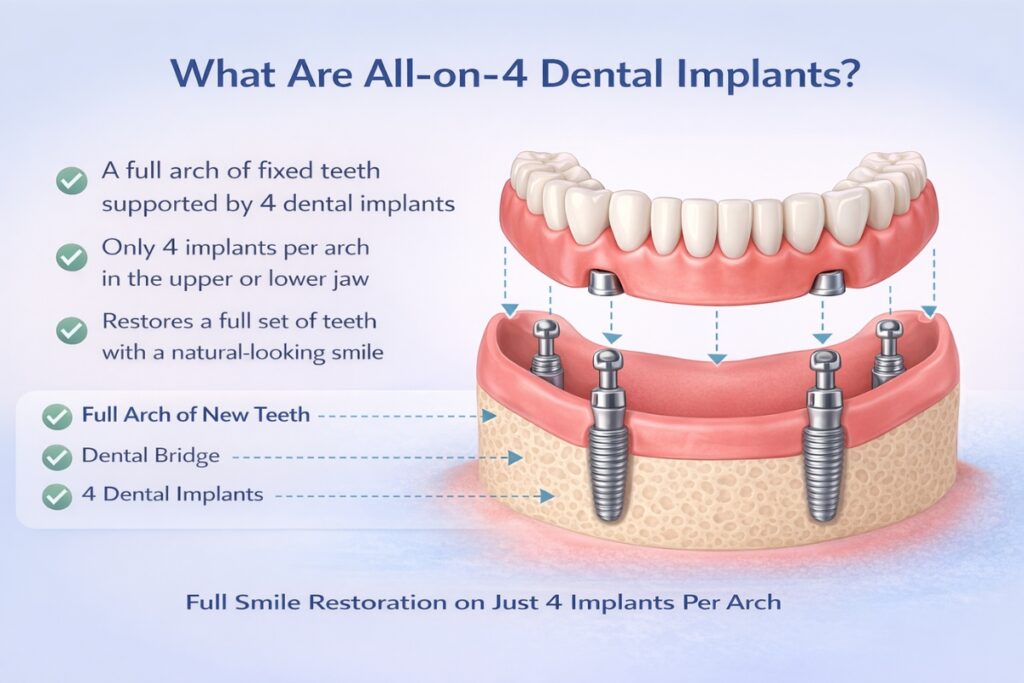
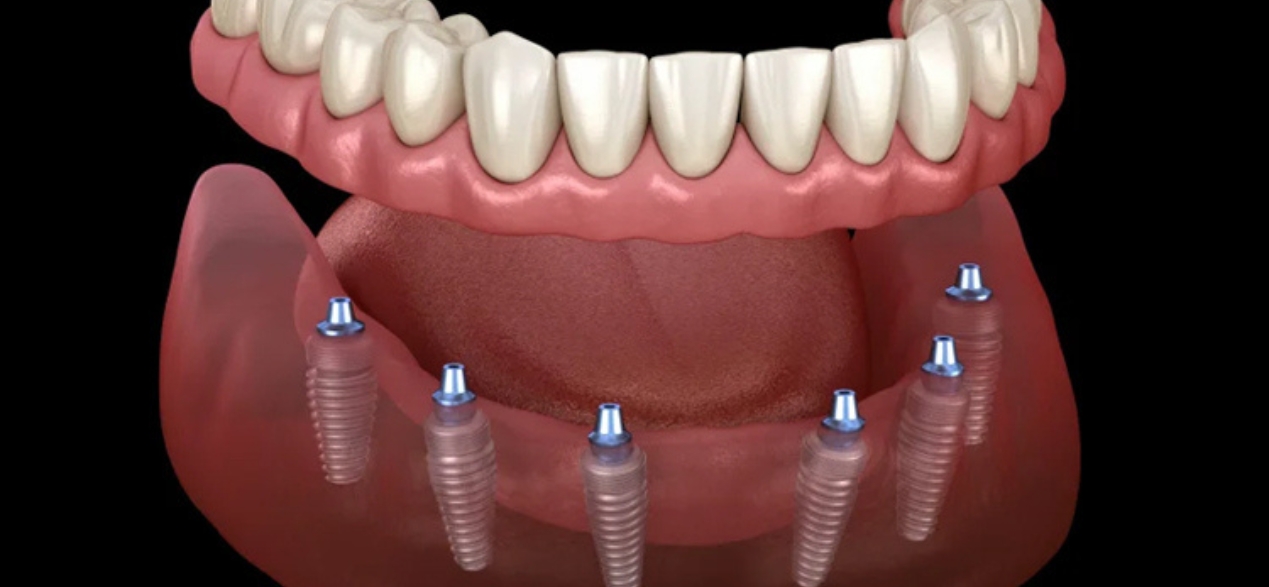
All-on-4 is a full-arch tooth replacement technique. Instead of placing a single implant for every missing tooth, four strategically positioned implants support an entire arch of teeth — upper, lower, or both.
The two rear implants are placed at an angle to take advantage of denser bone near the front of the jaw. This often eliminates the need for bone grafting, which makes the timeline shorter for many patients. A full prosthetic arch is attached the same day as surgery, though the final permanent restoration is placed after healing.
All-on-4 is a strong option for patients who’ve lost most or all of their teeth and want a fixed, non-removable solution. It’s more stable than traditional dentures and doesn’t require adhesives or nightly removal. According to clinical studies, All-on-4 implants have a survival rate above 95% over a 10-year period when proper aftercare is followed.
Which Dental Implants Are the Best?
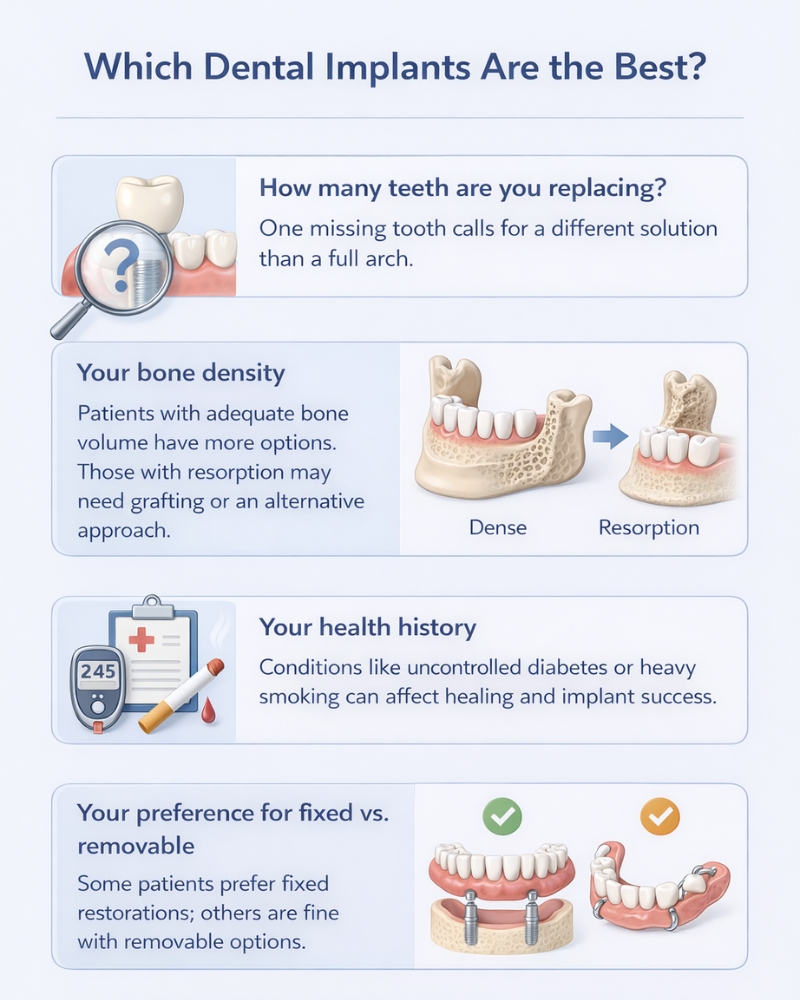
There’s no single “best” implant — there’s only the best option for your specific situation. A few key factors guide that decision:
- How many teeth are you replacing? One missing tooth calls for a different solution than a full arch.
- Your bone density — Patients with adequate bone volume have more options. Those with resorption may need grafting or an alternative approach.
- Your health history — Conditions, like uncontrolled diabetes or heavy smoking, can affect healing and implant success.
- Your preference for fixed vs. removable — Some patients prefer fixed restorations; others are fine with removable options.
For most patients replacing a single tooth with adequate bone, endosteal implants remain the gold standard. For full-arch replacement, All-on-4 is often the most practical and durable route. Your dentist will evaluate your bone structure, gum health, and bite before recommending anything.
If you’ve been sitting with a missing tooth or several, longer than you’d like, this is a good time to get a real answer. Not a quote, not a guess. An actual evaluation that tells you what’s possible. Contact Cascade Dental Care in Spokane to schedule your implant consultation and find out which option makes the most sense for your bite, your bone structure, and your life.
People Also Ask
How long do dental implants last?
The implant post, when properly integrated and maintained, can last a lifetime. The crown on top lasts 10 to 15 years before it may need replacement due to normal wear. Good oral hygiene and regular dental visits extend that lifespan significantly.
Is the dental implant procedure painful?
Most patients report that the procedure itself is more comfortable than they anticipated. Local anesthesia is used during placement, so you shouldn’t feel pain during surgery. Post-operative soreness is normal for a few days and typically managed with over-the-counter pain relievers.
Can dental implants fail?
Implant failure is possible, though uncommon. The overall success rate for dental implants exceeds 95% according to peer-reviewed literature. Failure is more likely with uncontrolled systemic conditions, poor oral hygiene, or heavy tobacco use. Early-stage issues can sometimes be corrected if caught quickly.
Do I need a bone graft before getting implants?
Not always. Whether you need a bone graft depends on how much bone remains in your jaw after tooth loss. Patients who have waited a long time to replace a missing tooth often experience bone resorption and may need grafting first. A 3D scan during your consultation will show exactly what you’re working with.
Are dental implants noticeable or different from natural teeth?
Well-placed implants are virtually indistinguishable from natural teeth. The crown is matched to the shape, size, and shade of your surrounding teeth. Function-wise, implants behave like natural teeth — you can eat, speak, and brush without any special accommodations.